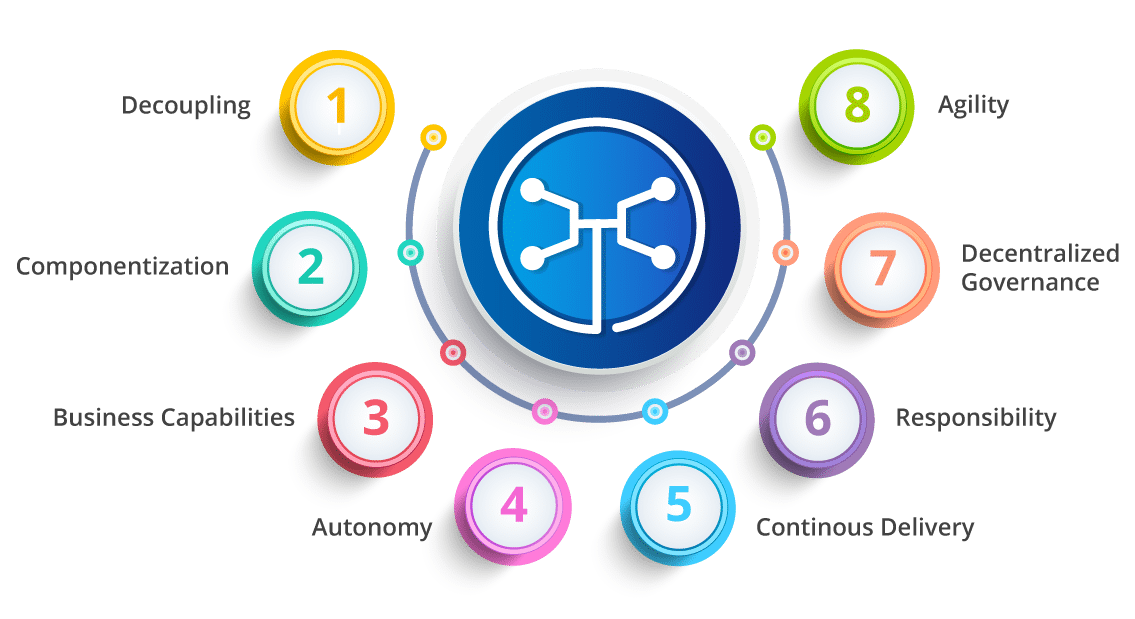
"Microservices architecture, supported by .NET Core, transforms modern software development by enabling scalable, resilient, and independently deployable services. By breaking down monolithic applications into smaller, modular components, businesses gain greater agility, faster development cycles, and improved system reliability. This introduction highlights the core principles of microservices and explains how .NET Core simplifies the design, deployment, and management of distributed applications."
Angular
Get in Touch

We’re here to help—send your message to  ai@akantik.com

Unveiling MicroService's Advantages:

  • Scalability :

Microservices allow for scaling individual components independently, enabling efficient resource allocation and optimal performance.

  • Flexibility and Agility :

By breaking down applications into smaller, modular services, developers can iterate, update, and deploy changes more quickly and with less risk to the overall system.

  • Resilience :

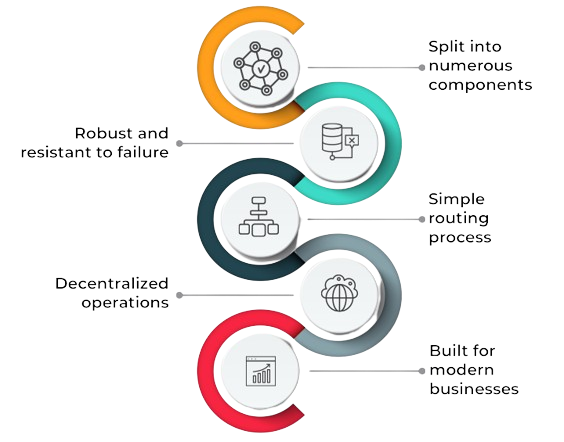
Isolating services minimizes the impact of failures, ensuring that the system remains operational even if one service experiences issues.

  • Improved Fault Isolation :

Issues within one service are less likely to affect other parts of the system, enhancing fault isolation and making troubleshooting and debugging easier.

  • Improved Performance :

Microservices can be optimized for specific tasks, resulting in better performance, faster response times, and greater efficiency compared to monolithic applications that handle multiple functions within a single codebase.

  • Easier Maintenance and Updates :

Smaller, focused services are easier to maintain, update, and refactor compared to monolithic applications, leading to reduced complexity and technical debt over time.

  • Enhanced Fault Tolerance :

With services isolated from each other, failures in one service are less likely to cascade throughout the system, improving overall fault tolerance and system reliability.
Angular
Decomposition
  • Breaks down monolithic applications into smaller, manageable services.
  • Each service focuses on a specific business capability or function.
  • Allows for better organization and understanding of the application's architecture.
Independence
  • Services can be developed, deployed, and scaled independently.
  • Changes to one service do not affect others, promoting agility and reducing risks during updates.
  • Enables teams to work on different services simultaneously without conflicts.
Scalability
  • Services can be scaled horizontally to handle varying levels of load.
  • Enables efficient resource utilization by scaling only the services that require additional capacity.
  • Supports dynamic scaling based on real-time demand, ensuring optimal performance.

Resilience
  • Isolates failures to individual services, preventing them from impacting the entire system.
  • Incorporates fault-tolerant design patterns such as circuit breakers and retry mechanisms.
  • Enhances system reliability and availability by minimizing the blast radius of failures.
Technology Diversity
  • Allows for the use of different programming languages, frameworks, and databases for each service.
  • Enables teams to select technologies that best suit the requirements of each service.
  • Promotes innovation and experimentation by embracing a polyglot approach to development.
Continuous Delivery
  • Enables automated testing, deployment, and delivery pipelines for each service.
  • Supports continuous integration practices to ensure code quality and reliability.
  • Facilitates faster time-to-market by streamlining the release process.

In summary, microservices architecture revolutionizes software development by breaking down monolithic applications into smaller, independent services. This approach enables greater agility, scalability, and resilience. While challenges exist, such as managing distributed systems, the benefits, including rapid iteration and scalability, make microservices a compelling choice for modern, adaptable software development. Reach out to us today to embark on a journey of innovation and success with MicroService's With .Net Core development.

Get in Touch

We’re here to help—send your message to  ai@akantik.com

Microservices with .NET Core FAQs

Common questions about microservices architecture and .NET Core development.

What are microservices and why should I adopt them?

Microservices is an architectural style where applications are built as small, independently deployable services. Benefits include:

  • Better scalability and resilience
  • Faster development cycles
  • Easier maintenance and updates
  • Technology flexibility per service
  • Independent team workflows
Why is .NET Core ideal for building microservices?

.NET Core is cross-platform, lightweight, and high-performance, making it perfect for microservices. It supports:

  • Containerization with Docker and Kubernetes
  • Built-in dependency injection
  • gRPC and REST APIs
  • Seamless Azure cloud integration
Can Akantik help migrate my monolithic application to microservices?

Yes, Akantik specializes in decomposing monolithic applications into microservices. We analyze your architecture, identify service boundaries, and execute a phased migration strategy to minimize risk and ensure business continuity.

What tools and patterns does Akantik use for microservices?

Akantik uses industry-standard tools:

  • Docker for containerization
  • Kubernetes for orchestration
  • API gateways (Ocelot, YARP)
  • RabbitMQ / Azure Service Bus for messaging
  • Circuit breakers and service discovery
  • CI/CD pipelines for automated deployment
How do microservices improve application scalability?

Microservices allow individual services to scale independently based on demand. High-traffic services can be scaled horizontally without affecting other parts of the system, optimizing resource usage and reducing infrastructure costs.

Hire Us