Logistics & Supply Chain
Current Challenges in Logistics & Supply Chain
Logistics and supply chain operations run on visibility gaps more than most people realize. Shipment tracking is scattered across carrier portals and systems that don't share data, so knowing exactly where a shipment is means checking several places instead of one. Dispatch and routing decisions often get made on gut feel rather than real-time conditions, so a delay or a route change isn't caught until it's already cost time. Fleet and warehouse equipment maintenance tends to be reactive, a breakdown gets discovered after it happens rather than flagged before it does. Demand forecasting for inventory and replenishment often runs on stale historical averages instead of live signals, so a shortage or a glut shows up as a surprise. And compliance paperwork, carrier certifications, DOT filings, customs documentation, gets tracked manually across files instead of a system that flags what's due and when.
How Akantik Solves This
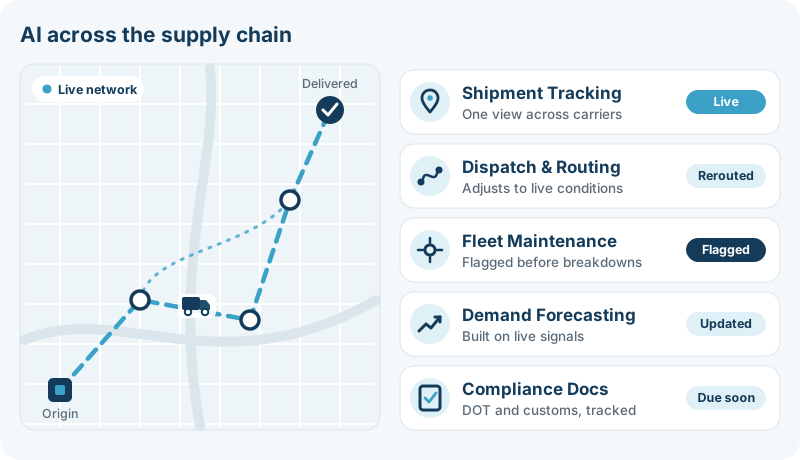
We don't ask a logistics or distribution business to replace its WMS or carrier systems, we build the layer that connects them and makes the data usable. Our AI-Powered ERP unifies shipment, inventory, and carrier data into one platform with real-time visibility, so a delay or a stock shift shows up as a signal instead of a surprise at delivery. Workflow & Business Automation handles dispatch and routing based on real constraints, vehicle availability, driver hours, and current demand, instead of a manual call made on gut feel. Equipment Lifecycle Management (EquipFlow) tracks the health and maintenance history of fleet and warehouse equipment, so a likely failure gets flagged before it strands a truck or stalls a line. And where compliance is the burden, our Compliance Tracking System (CTS) keeps carrier certifications, DOT filings, and customs documentation in one auditable place with clear due dates, instead of a filing cabinet. Every one of these integrates with the WMS, TMS, and ERP systems already in place, rather than replacing them.
Future Technology & AI for Logistics & Supply Chain
The next step for most logistics operations isn't a new fleet or warehouse system, it's making the data those systems already produce work harder. Demand forecasting trained on live sales and lead-time signals, not stale historical averages, can catch a shortage or a glut before it becomes a problem. Predictive maintenance models trained on fleet and equipment data can flag a likely failure days before it happens, instead of after a truck is stranded or a line stalls. Route optimization that accounts for real-time traffic, weather, and driver hours can adjust a dispatch plan as conditions change, not just once at the start of the day. Anomaly detection on operational data can flag a throughput dip or a cost spike early enough to act on it, before it becomes an incident. And an AI copilot that a logistics manager can simply ask a direct question, such as which carrier is running late this week, becomes a realistic, buildable tool rather than a slide in a pitch deck.
Tech Stack & Case Studies
Our Tech Stack
Our logistics and supply chain work runs on the same core platform as the rest of our business, ASP.NET Core and C# on the backend, Angular on the frontend, and SQL Server and Azure for data and hosting, with IoT and telematics integration layered in wherever a client needs live fleet or sensor data flowing into the system.
Case Studies
Fleet & Equipment Deployments : A recurring engagement for logistics clients is applying Equipment Lifecycle Management (EquipFlow) to fleet and warehouse equipment, so maintenance history and likely failures are visible ahead of time instead of discovered after a breakdown.
Supply Chain Visibility & ERP Deployments : For clients managing shipments and inventory across multiple carriers and warehouses, we've applied our AI-Powered ERP to bring that data into one real-time view, replacing the manual checking-across-systems that used to be the norm.
Other Clients Across Logistics & Distribution : Beyond core logistics, we've applied this same visibility, automation, and compliance-tracking approach for other clients moving goods, managing fleets, or coordinating across warehouses, since the underlying need, connecting scattered systems into one view, holds across the sector.
Chasing shipment status across five different carrier portals, or finding out about a truck breakdown after it's already stranded? Let's fix that.
Logistics & Supply Chain FAQs
Common questions about AI, visibility, and fleet solutions for logistics and supply chain operations.
What logistics problems does Akantik's technology actually solve?
We focus on the problems that cost logistics businesses the most: fragmented tracking, manual dispatch, reactive maintenance, and manual compliance paperwork. Our AI-Powered ERP, Workflow Automation, and EquipFlow are built directly against these.
Do we need to replace our WMS or TMS to use Akantik's systems?
No. Our systems are designed to integrate with your existing WMS, TMS, and ERP rather than requiring a rip-and-replace.
How does predictive maintenance work for a fleet or warehouse equipment?
Sensor and equipment data train a model to recognize patterns that precede a failure, flagging a problem before it strands a truck or stalls a line.
Can Akantik connect data across multiple carriers and warehouses?
Yes. Our AI-Powered ERP brings shipment, inventory, and carrier data into one real-time view instead of five separate systems.
What kind of logistics and supply chain clients has Akantik worked with?
We've built systems for clients moving goods, managing fleets, or coordinating across warehouses, where connecting scattered systems is a core need.
How long does an implementation like this typically take?
It depends on scope, but we deploy in phases, starting with the module that solves your most urgent problem, so you see value before a single, large go-live.